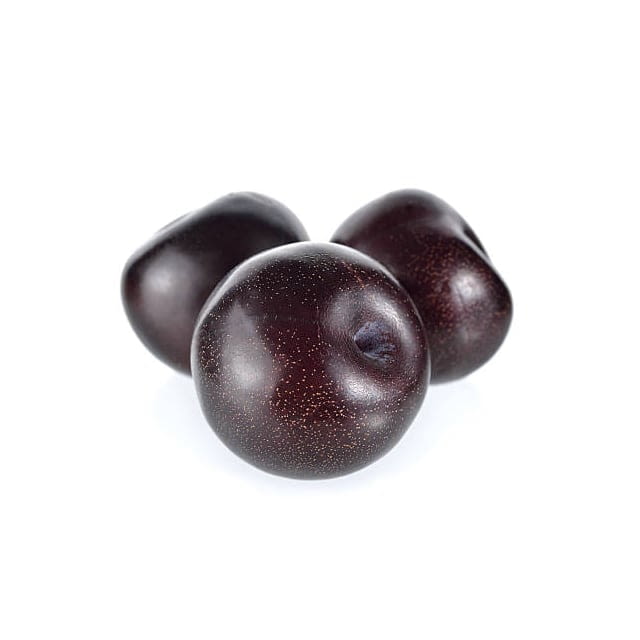
Black plums wholesale price — $58.00 / 28 lb case
Supplier ref. 03810 · quoted October 5, 2026
Black plums are quoted at $58.00 / 28LB case in the week of October 5, 2026. That is the lowest wholesale quote we recorded that week from the single New York distributor we track — not a market average, and not an official terminal quotation. The quote covers one 28LB case, the unit the supplier invoices; we never divide it by a weight to publish a price per pound.
Price history
13 weekly quotes over 3M · lowest wholesale price observed, per 28LB case
Over the last 12 months
Over the last 31 weekly quotes, black plums ranged from $34.00 to $66.00 per 28LB case, averaging $50.03. Today's $58.00 / 28LB case is above the 31-quote average of $50.03. The quote is up 26.1% from three months ago, when it stood at $46.00. The sharpest week-over-week move in the series is 42.4%, in the week of April 13, 2026 ($66.00 to $38.00).
- Low
- $34.00
- High
- $66.00
- Average
- $50.03
- Quotes
- 31
Why Black plums is moving
High confidenceBlack plum prices are currently holding firm at $58.00 per case, reflecting a notable increase of +26.1% over the last three months. This upward trend is primarily driven by the accelerated conclusion of California's stone fruit season, which saw an earlier-than-normal finish in 2026 due to unusually warm weather conditions that pushed crop development ahead of schedule. As the primary shipping origin for October, the winding down of California supplies is creating tighter availability in the market, leading to the higher pricing we are observing. Buyers should anticipate continued firm pricing as we approach the verified supply gap in November and December.
- early end to California season
- tightening supply
3 sources consulted
Written automatically from public sources on 2026-10-06. Our own quotes are the supplier's; the causes above come from the sources listed.
What is in the case
One case of black plums is invoiced as 28LB — the only pack size quoted this week, and the weight the supplier states on the pack.
Availability in New York
January-October; real and verified gap in November-December
Where it comes from
In October, our reference lists a single origin shipping stone fruits into New York: California (USA), on trade calendars only. Sourcing is documented at the stone fruits level and applied to this item. Our reference calendar shows no black plums on the New York market in November to December.
- ChileJan, Feb, Mar, Apr, Maytrade calendar
- California (USA)May, Jun, Jul, Aug, Sep, Octtrade calendar
- South AfricaMarobserved for this category
Sourcing documented at category level (Stone fruits) and applied to this product. Based on 11 sources · confidence: high
About Black plums
Stone fruit carries the longest documented supply gap of any fruit category on this catalog. Our reference data records supply across most of the calendar and a real, verified break at the end of the year, when neither hemisphere is shipping. The rest of the time it runs on a two-origin rotation — Chile through the early part of the year, California through the middle and late season — and the changeover is visible in the fruit before it is visible in the price, because imported and domestic stone fruit arrive at different firmness. Plums and nectarines are quoted in cases sized by weight rather than by count.
Buying notes
Stone fruit is bought on arrival condition as much as on price: it ships firm and finishes in your walk-in, so order ahead of the service you need it for. Expect the list to thin out at the end of the calendar year — that is the documented gap in supply, not a failure on the order.
Frequently asked questions about Black plums
How much do black plums cost wholesale in New York?
Black plums are quoted at $58.00 / 28LB case in the week of October 5, 2026, the lowest wholesale quote we recorded that week. The quote covers one 28LB case, the unit the supplier invoices; we never divide it by a weight to publish a price per pound.
Are black plums expensive right now?
Against our own series, no reference price: over 31 weekly quotes black plums ranged from $34.00 to $66.00, averaging $50.03. Today's $58.00 / 28LB case is above that average. That compares this item to its own history, not to another supplier.
Where do black plums come from?
In October, our reference lists a single origin shipping stone fruits into New York: California (USA), on trade calendars only. Sourcing is documented at the stone fruits level and applied to this item. Our reference calendar shows no black plums on the New York market in November to December.
What is in a case of black plums?
One case of black plums is invoiced as 28LB — the only pack size quoted this week, and the weight the supplier states on the pack.
How much has the price of black plums moved this year?
Up 20.8% over twelve months, from $48.00 to $58.00 / 28LB case. The sharpest single week was 42.4%, in the week of April 13, 2026.
Are these the official Hunts Point prices?
No. $58.00 / 28LB case is the lowest of 31 weekly quotes we recorded from one distributor serving New York. The USDA publishes the official New York terminal market quotations; we link to them from our methodology page.