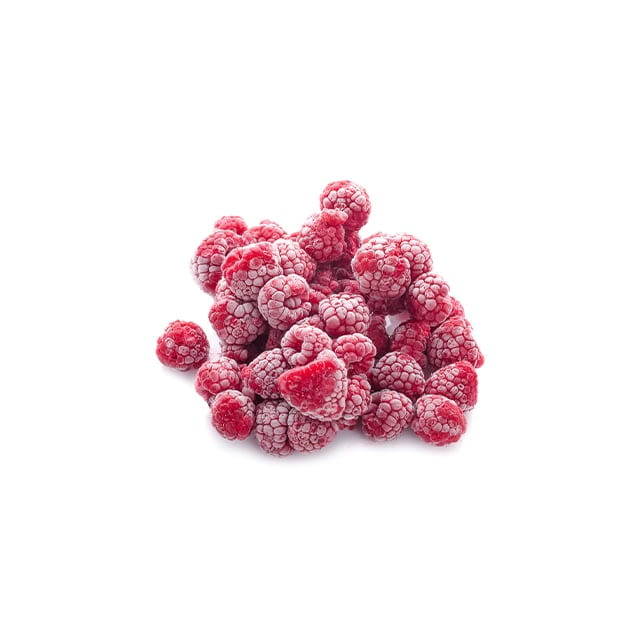
Frozen raspberries wholesale price — $44.00 / 10–20 lb case
Supplier ref. 02706 · quoted October 5, 2026
Frozen raspberries are quoted at $44.00 / 10-20LB case in the week of October 5, 2026. That is the lowest wholesale quote we recorded that week from the single New York distributor we track — not a market average, and not an official terminal quotation. The quote covers one 10-20LB case, the unit the supplier invoices; we never divide it by a weight to publish a price per pound.
Price history
13 weekly quotes over 3M · lowest wholesale price observed, per 10-20LB case
Over the last 12 months
Over the last 53 weekly quotes, frozen raspberries ranged from $44.00 to $76.00 per 10-20LB case, averaging $72.38. Today's $44.00 / 10-20LB case is the lowest we have quoted in 53 weeks. The quote is down 42.1% from three months ago, when it stood at $76.00. The sharpest week-over-week move in the series is 42.1%, in the week of August 31, 2026 ($76.00 to $44.00). Across our series, frozen raspberries were cheapest in September (average $44.00) and dearest in November (average $76.00). That is one year of observation, not a seasonal rule.
- Low
- $44.00
- High
- $76.00
- Average
- $72.38
- Quotes
- 53
Why Frozen raspberries is moving
High confidenceThe current price for frozen raspberries stands at $44.00 per case, reflecting a substantial 42.1% decrease over the past three months. This significant price correction is largely attributable to an anticipated increase in raspberry harvest from Mexico, a key supplier to the U.S. market, with projections indicating a 7% jump in their 2026 output, and improved supplies expected to cross into the U.S.. Additionally, a robust 2025 frozen raspberry crop in Washington, which accounts for 90% of U.S. production, likely contributed to higher inventory levels entering the current season. Globally, raspberry production has been expanding at a faster rate than consumption, leading to an oversupply of processing berries that can trigger sharp price declines, further contributing to the current market softness.
- increased Mexican supply
- strong US domestic harvest
- global oversupply
7 sources consulted
Written automatically from public sources on 2026-09-26. Our own quotes are the supplier's; the causes above come from the sources listed.
What is in the case
One case of frozen raspberries is invoiced as 10-20LB — the only pack size quoted this week, and the weight the supplier states on the pack.
Availability in New York
Year-round (frozen — no agricultural seasonality)
Where it comes from
In October, our reference lists eight origins shipping frozen red fruit into New York: Mexico, Chile, Serbia, Egypt and Argentina appear in market reports for this category, and Peru, Canada and United States — Maine on trade calendars only. Sourcing is documented at the frozen red fruit level and applied to this item.
- Mexicoyear-roundobserved for this category
- Chileyear-roundobserved for this category
- Serbiayear-roundobserved for this category
- Peruyear-roundtrade calendar
- Canadayear-roundtrade calendar
- United States — Maineyear-roundtrade calendar
- Egyptyear-roundobserved for this category
- Argentinayear-roundobserved for this category
Sourcing documented at category level (Frozen red fruit) and applied to this product. Based on 6 sources · confidence: high
About Frozen raspberries
Frozen red fruit is the IQF berry line — strawberry, raspberry, blueberry — sold to New York kitchens that need berries with no shelf-life clock and no seasonal gap. Our reference data records a wide import base for these berries, and that is precisely the point: a packer can source the same specification from several countries, which is why a frozen berry does not follow the fresh berry market week for week. What moves the price is the packer's cost and the size of the case, not the harvest.
Buying notes
IQF cases are quoted on net weight and the same berry can come in more than one case size, so check which one you are being quoted before comparing. These prices move in steps when a new pack arrives rather than week to week, so a level that has held for months is not in itself a reason to wait.
Frequently asked questions about Frozen raspberries
How much do frozen raspberries cost wholesale in New York?
Frozen raspberries are quoted at $44.00 / 10-20LB case in the week of October 5, 2026, the lowest wholesale quote we recorded that week. The quote covers one 10-20LB case, the unit the supplier invoices; we never divide it by a weight to publish a price per pound.
Are frozen raspberries expensive right now?
Against our own series, no reference price: over 53 weekly quotes frozen raspberries ranged from $44.00 to $76.00, averaging $72.38. Today's $44.00 / 10-20LB case is at the bottom of that range. That compares this item to its own history, not to another supplier.
When are frozen raspberries cheapest in New York?
In our series the monthly average was lowest in September ($44.00) and highest in November ($76.00). That is one year of weekly observation from one distributor, not a seasonal rule — a single cold season or a freight event can move a month.
Where do frozen raspberries come from?
In October, our reference lists eight origins shipping frozen red fruit into New York: Mexico, Chile, Serbia, Egypt and Argentina appear in market reports for this category, and Peru, Canada and United States — Maine on trade calendars only. Sourcing is documented at the frozen red fruit level and applied to this item.
What is in a case of frozen raspberries?
One case of frozen raspberries is invoiced as 10-20LB — the only pack size quoted this week, and the weight the supplier states on the pack.
How much has the price of frozen raspberries moved this year?
Down 42.1% over twelve months, from $76.00 to $44.00 / 10-20LB case. The sharpest single week was 42.1%, in the week of August 31, 2026.
Are these the official Hunts Point prices?
No. $44.00 / 10-20LB case is the lowest of 53 weekly quotes we recorded from one distributor serving New York. The USDA publishes the official New York terminal market quotations; we link to them from our methodology page.